

Products
T-Shirt – A real work garment
Jan



T-Shirt: From Undershirt to Souvenir, Keepsake, and Identity
It’s hard to find a garment that feels more “everyday” than a T-Shirt. It’s simple, usually affordable, and found in almost every wardrobe. And yet it has a strange superpower: with a single print across the chest, it can transform from a basic staple into a memory, a souvenir, and an identity marker. A concert T-Shirt can be a ticket that never fades. A travel T-Shirt can become a wearable diary. And a T-Shirt from an event can be the thread that lets you say, ten years later: “I was there.”
To understand why the T-Shirt works so well as a souvenir, we need to follow its journey through the 20th century—from underwear and uniform to pop culture, mass media, and finally one of the world’s most effective formats for carrying memories.
Origins: A Practical Undershirt That Became Visible
The T-Shirt has its roots in a time when underwear was truly under—a functional layer meant to protect outer clothing and make work more bearable. In the late 1800s and early 1900s, one-piece undergarments such as the “union suit” were common in North America; an early version was patented as far back as 1868 under the name “emancipation union under flannel”.
Historical summaries often describe how undergarments were gradually simplified and split into separate pieces. In a strictly historical sense, it’s best understood as a development over many steps rather than a single invention—but the point remains: the need for simple, washable tops was strong, especially in warm working environments.
1913: When the Navy Standardized the Shape
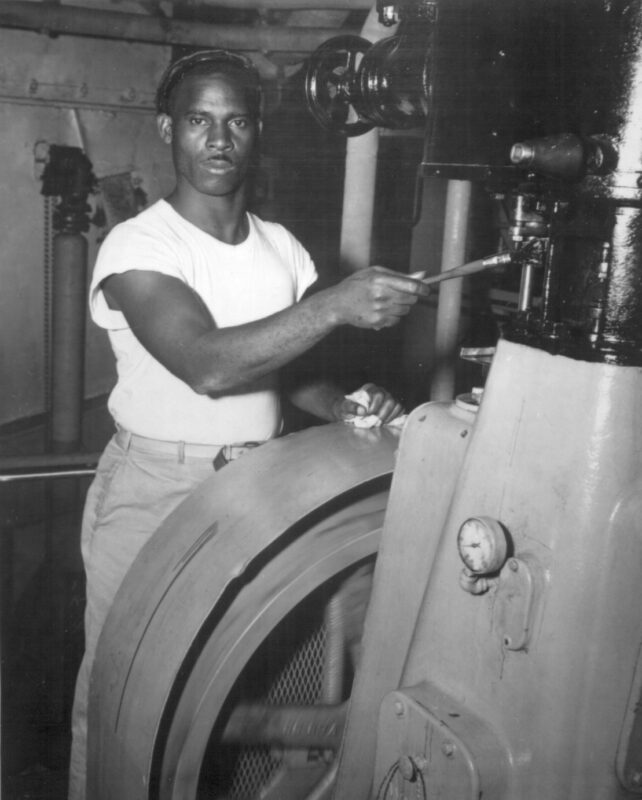
A frequently cited milestone is 1913, when the U.S. Navy is said to have begun issuing a white, short-sleeved, buttonless undershirt as part of the uniform’s base layer. When a large institution standardizes a garment, it does more than hand out fabric—it turns the garment into a norm.
And when something becomes a norm in an environment where people travel, work, and move between places, it spreads quickly. A white undershirt becomes something you see when the jacket comes off in heat and hard work. Suddenly it’s not just a private detail, but a public image of “practical, simple, ready.”
“T-Shirt” as a Word: Earlier Than Many Think
Here’s a small but important piece of fact-detective work. There’s a persistent belief that F. Scott Fitzgerald was “first” to use the word T-shirt in 1920. He did use the word and is often quoted—but the Oxford English Dictionary notes that the earliest recorded printed use is from 1912, in the Daily Princetonian.
That fits well with how everyday things become “official”: first the word appears in small contexts, then it shows up in literature and newspapers, and finally it lands in dictionaries.
1942: When the Printed T-Shirt Became Mass Media
If the Navy gave the T-Shirt a standard, mass media gave it symbolism. On July 13, 1942, an issue of LIFE (Vol. 13, No. 2) connected to the “Air Corps Gunnery School” was published, and this issue is often highlighted in T-Shirt history as an early mass-media appearance of a printed T-Shirt.
That nuance matters: it wasn’t “the first print in the world,” but one of the early moments when a graphic T-Shirt clearly appeared in a medium with enormous reach. The T-Shirt thereby became more than a garment—it became a surface.
And once a garment becomes a surface, it gains a future as a message—and eventually as a souvenir.
The 1950s: Movie Stars Turn the T-Shirt Into an Attitude
In the 1950s, the T-Shirt gained its strongest mythology: the simple white shirt as a symbol of youth, strength, and rebellious simplicity. Popular media and fashion-history summaries describe how Old Hollywood helped establish casualwear as an ideal—and how the T-Shirt and jeans became an iconic combination.
That matters for the logic of souvenirs. For a souvenir to work, it has to be something you actually want to wear. When the T-Shirt became “cool,” a perfect vessel emerged: a garment that is both everyday-wearable and symbolically charged.
The 1960s–70s: The T-Shirt Becomes a Message, a Badge, and “I Was There”
Once the T-Shirt was accepted as outerwear, the step toward printing and messaging was short. From the 1960s onward, the T-Shirt became a clear carrier of identity: political slogans, bands, sports, student life, and advertising. This was reinforced as printing methods and production scaled up—especially within the screen-printing industry—making it easier to produce larger volumes.
And this is where the modern souvenir T-Shirt is truly born: not just “a shirt from a place,” but a shirt that says something.
One of the best-known examples is I ♥ NY. MoMA documents Milton Glaser’s concept sketch and notes that the design was created in 1976. Wherever you stand in the debate about originals and copies, the effect is clear: a short, simple symbol on the chest can carry an entire city—and an entire visit.
Why Do T-Shirts Work So Well as Souvenirs?
Here’s what makes the T-Shirt unique compared with many other souvenirs:
1) It’s practical—and practical souvenirs survive
A figurine ends up on a shelf. A magnet ends up on the fridge. But a T-Shirt enters rotation: it gets worn, washed, packed for the next trip, shows up at the beach, in the garden, at the gym. It’s a souvenir that doesn’t just remember—it lives.
2) It carries the memory close to the body
There’s a psychological dimension here that the souvenir trade has intuitively understood for decades: when you wear something on your body, the memory is easier to access. A T-Shirt can act as a “trigger”—the text or graphic becomes a key to a story: who you were there with, what happened, how it felt.
3) It’s social: it starts conversations
A souvenir becomes even more valuable when it gets a second life with other people. A T-Shirt that says “ÅLAND,” “Stockholm Marathon,” a band name, or a museum becomes a conversation starter. It signals “I’ve been part of something” and invites questions.
4) It works as a badge of belonging
This may be the most important souvenir point: a T-Shirt can say “I belong.” It can represent an event, a place, a culture, a hobby. It’s a softer version of a uniform: recognition without obligation.
Quirks 🙂
The Souvenir T-Shirt as a Cultural Object
Souvenir T-Shirts also have their charming quirks:
It can be kitsch—and that’s the whole point. Sometimes you don’t want “subtle design”; you want a shirt that practically screams vacation.
It can be a trophy. Competitions, adventures, hikes, festivals: the T-Shirt becomes proof that’s more useful than a medal.
It can be a time stamp. A year on the back—“Åland 2026,” “Åland Islands Summer 2025”—and suddenly you’ve got an archive in your wardrobe.
Conclusion: The T-Shirt Is the Perfect Souvenir Format
The T-Shirt’s story begins as functional underwear, gains momentum through standardization (1913), becomes mass-media visible with LIFE in 1942, and grows through the 20th century into both style and message. Once it became that, the step to souvenir was obvious: a T-Shirt is a story you can wear.
And perhaps that’s why it still sells everywhere—not because the world needs more shirts, but because people will always need more ways to say: “this meant something to me.”
FAQ om T-Shirt som souvenir
Klicka på en fråga för att visa svaret.
En T-Shirt är både praktisk och minnesbärande: den används ofta, syns offentligt och väcker samtal. Den fungerar också som ett “klubbmärke” – ett enkelt sätt att visa att man varit på en plats eller ett evenemang.
T-Shirten började synas mer under 1900-talets första hälft och lyfts ofta som massmedialt synlig via LIFE den 13 juli 1942. Under 1950-talet hjälpte populärkultur till att etablera T-Shirt som ett casual plagg.
Tryck förekom tidigare, men T-Shirten som massproducerad bärare av budskap växte starkt under mitten av 1900-talet i takt med att screentryck och produktionsteknik skalades upp.
Det syftar på att plagget, utbrett platt, liknar bokstaven T. Ordet är belagt i tryck senast 1912 enligt OED.


